Iranian Missile Strikes QatarEnergy-Leased Oil Tanker In The Persian Gulf
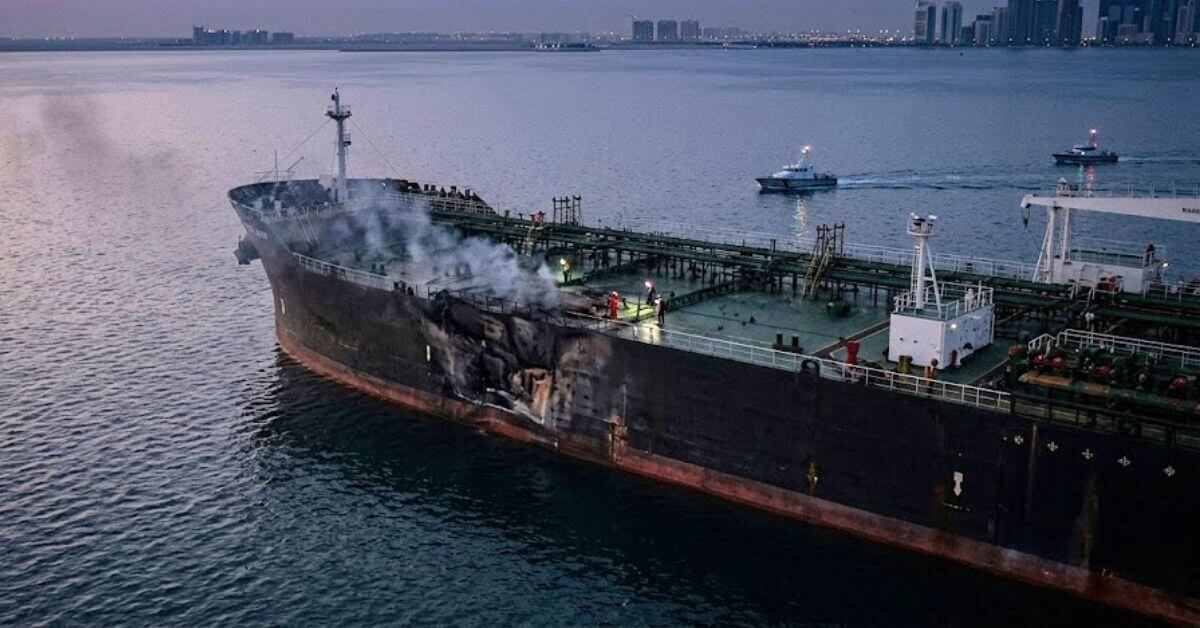
An oil tanker operating under contract to QatarEnergy was hit by an Iranian cruise missile in Qatari waters on Wednesday, Qatar’s Ministry of Defence said. No casualties were reported.
According to the ministry, three cruise missiles were launched from Iran toward Qatar. Air defence systems intercepted two of them, while the third struck the fuel oil tanker Aqua One.
The vessel was located about 17 nautical miles north of Ras Laffan Industrial City, Qatar’s main energy hub and the site of the world’s largest liquefied natural gas export facility.
All 21 crew members onboard were safely evacuated, and officials confirmed that no injuries were reported. The tanker sustained damage above the waterline, but there was no environmental impact.
QatarEnergy said the incident took place in the early hours of April 1 and added that its operations were not affected.
The United Kingdom Maritime Trade Operations (UKMTO) also reported the incident and said the situation was quickly brought under control.
Iran’s Islamic Revolutionary Guard Corps (IRGC) claimed responsibility for the strike. In a statement carried by state media, the IRGC said the vessel was targeted because of what it described as links to Israel. It added that the tanker was hit in a missile attack carried out by its naval forces.
The attack follows earlier missile strikes that caused damage to Ras Laffan Industrial City less than two weeks ago.
Qatar shares the world’s largest natural gas reserve with Iran, making the area important for global energy supply. Recent attacks have already affected about 17% of Qatar’s liquefied natural gas export capacity.
References: Reuters, iranintl
Want to read more?
Check out the full article on the original site