From Shave Ice to Saimin, These are 24 Must-Eat Dishes in Hawai‘i
To me, the best part of traveling is eating. You can learn a lot about the history and culture of a place through its foods; take Hawai‘i, for example.
The Islands’ diverse cultures and rich history are showcased through its varied cuisine. You can find everything from Vietnamese pho to Portuguese bacalao to Puerto Rican pasteles in Hawai‘i.
“For many folks, food has become one of the main influencers of travel plans,” says Hilo-based food historian Arnold Hiura, who penned the book “Kau Kau: Cuisine and Culture in the Hawaiian Islands.” “Enjoying food specific to a locality enhances our memories of that place, remaining vividly embedded in our memory, like a special photograph. A Chicago dog, a Philly cheesesteak, a Texas or Kansas City or Memphis barbecue. Every place has its own set of iconic foods.”
And Hawai‘i is no exception.
Here’s your cheat sheet on what to eat in the Islands.
Poke

Photo: Aaron K. Yoshino
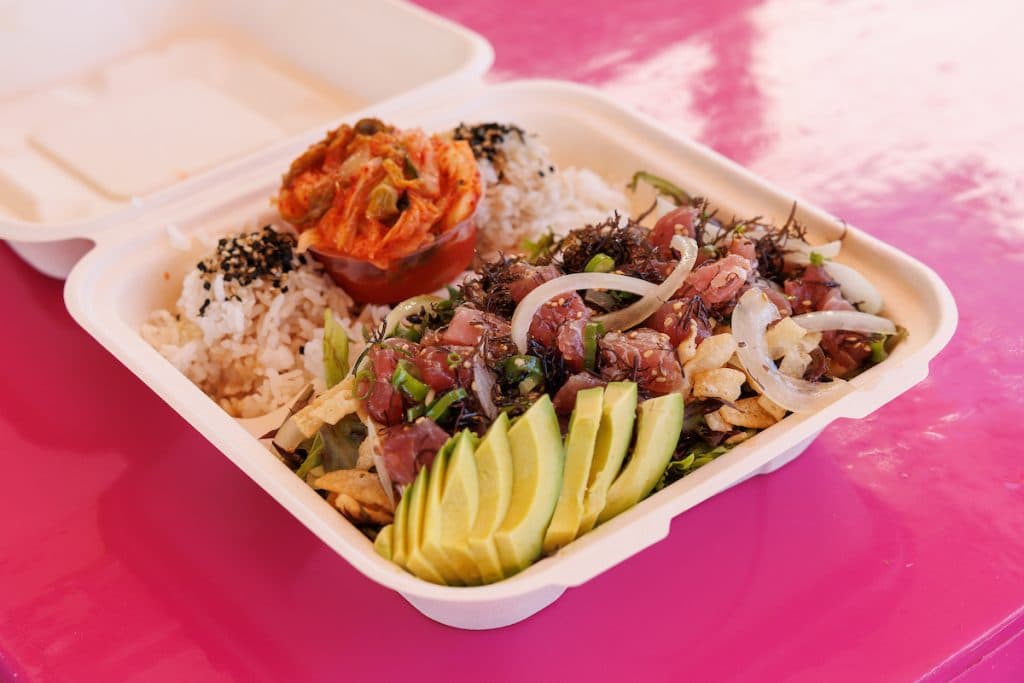
Seems so simple—cubed raw ‘ahi tossed with seaweed, sweet onions and ‘inamona (roasted kukui, or candlenut)—but poke has become a seriously complex dish. Instead of ‘ahi, you can find poke made with raw salmon, tako (octopus), even beets. The sauces range wildly from traditional shoyu to spicy mayo to miso, and toppings are equally diverse, from avocado slices to tobiko (flying fish roe) to Korean taegu (spicy-sweet dried cuttlefish). The most popular way to eat poke is from a bowl—your choice of poke piled on rice and dressed with whatever sauce or toppings you want.
TRY THESE: ‘Ono Seafood on Kapahulu Avenue is one of the most popular poke spots on O‘ahu. This modest hole-in-the-wall offers eight kinds of poke; the most popular is the shoyu ‘ahi tossed in a secret concoction of premium shoyu and seasonings. On Hawai‘i Island Poke Market in Hilo serves inventive styles of poke bowls, from its not-so-basic bowl of poke served on sushi rice with sweet potato salad and housemade sunomono (Japanese cucumber salad) to something called Tokyo Drift with wasabi-wafu sauce, onions, masago (capelin fish eggs), fried garlic and fried shallots.
Loco Moco
Such a simple dish—hamburger patties, white rice, eggs, brown gravy—and yet so satisfying. According to lore, the loco moco originated at the now-defunct Lincoln Grill in Hilo, when teenagers requested the combination. Today this iconic dish, both filling and cheap, can be found everywhere in the Islands, from high-end restaurants to mom and pop shops.
TRY THESE: Koko Head Café on O‘ahu is known for its inventive twists on local breakfast classics. Its Koko Moko combines a patty made with local beef, crispy garlic rice, mushroom gravy and tempura kimchi. And along with a more traditional loco moco, Hilo’s Café 100 serves more than 30 varieties, from Spam and chorizo to ‘ahi and garden burgers.
Spam Musubi
The Spam musubi is pretty close to the perfect snack—a slice of fried Spam over a compacted block of white rice, and all of it wrapped with a ribbon of dried nori (seaweed). It’s practically a meal! There are dozens of versions, from deep-fried Spam to combos with Spam and scrambled egg, even slices of avocado. You can find Spam musubi just about everywhere, from sushi shops to convenience stores.
TRY THESE: Tanioka’s Seafood and Catering serves one of O‘ahu’s favorite Spam musubi. Co-founder Lynn Tanioka started making them for her son’s soccer team over 45 years ago, and today the shop in Waipahu churns out thousands every week. Kawamoto Store is a hole-in-the-wall okazuya in Hilo that serves all sorts of to-go fare, like shrimp tempura and Korean chicken. But one of its most popular items is the Spam musubi—so good it often sells out before noon.
Saimin
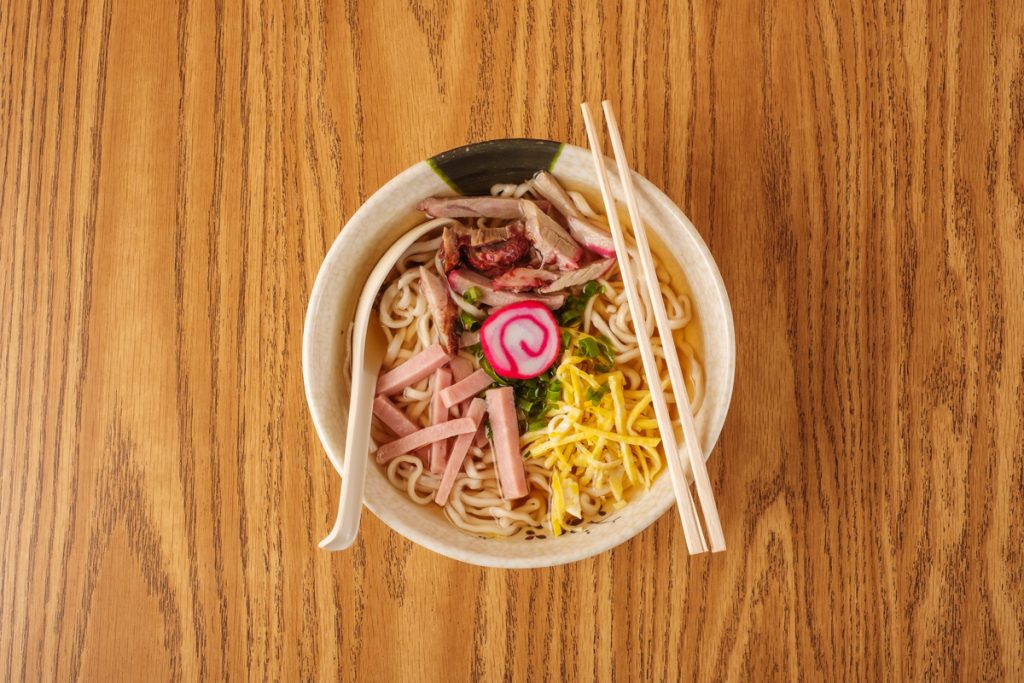
Photo: Aaron K. Yoshino
Saimin (pronounced sigh-min) is a noodle dish found only in Hawai‘i. The word “saimin” is a combination of two Chinese words—sai meaning thin and min, which means noodle. The dish dates back to the plantation era in Hawai‘i, when workers from various ethnic camps would gather to eat, bringing with them various ingredients to share.
The noodles are what make saimin unique from other Asian noodle dishes like Japanese ramen and Vietnamese pho. Saimin noodles are typically darker in color, curly and slightly chewy when cooked. The noodles are served in a hot dashi, or broth, usually made from shrimp, mushrooms, ginger and konbu (dried kelp).
TRY THESE: Hamura’s Saimin Stand in Līhu‘e, Kaua‘i, well-known for its old-fashioned bowls of homemade noodles, was recognized by the prestigious James Beard Foundation as one of America’s Classics in 2006. There aren’t many seats and lunchtime gets busy, so go early to avoid the crowds. Shige’s Saimin Stand in Wahiawā is one of the last remaining old-school saimin stands on O‘ahu, and its chewy noodles are made right in the kitchen every morning. Pair a bowl with a barbecue burger and a couple of teriyaki beef sticks.
Manapua
Also called char siu bao, these steamed or baked buns are typically filled with sweet, Chinese-spiced shredded pork. But some shops stuff them with lup cheong (a sweet Chinese sausage), kālua pork or curry. O‘ahu has way more manapua shops than any other island; even 7-Eleven sells them.
TRY THESE: Opened in 1974, Royal Kitchen, just outside Chinatown on O‘ahu, was one of the first shops in Honolulu to offer baked bao instead of the more common steamed ones. Its baked char siu manapua is one of its most popular, though it also serves ones filled with hot dogs, chicken curry and Okinawan sweet potato. One of the few places on Maui where you can find manapua—among other delicious baked goods—is Four Sisters Bakery & Catering in Wailuku. The best part is the bun itself, pillowy and soft. (While you’re there, try the butter rolls and sugarcoated yeast doughnuts, too.)
Shave Ice
Don’t get them confused: Hawai‘i’s shave ice is nothing like a snow cone. For starters, the ice in shave ice is most often super fine, giving it a fluffy texture. Second, many Hawai‘i shops make their own syrups, from haupia (coconut) to Kona coffee. And finally, you won’t find the add-ins anywhere else, toppings like sweetened condensed milk and soft mochi balls. From its humble beginnings over a century ago, when vendors peddled cups of powdered ice sweetened with fruit syrups out of pushcarts along Honolulu Harbor, shave ice has come a long way. (And don’t call it shaved ice. It’s shave ice.)
TRY THESE: With three locations on Kaua‘i, JoJo’s Shave Ice has been a local favorite since it opened in 1992. That’s due, in part, to its homemade syrups and toppings in tropical flavors like coconut, liliko‘i and pineapple. Its housemade haupia topping is one of its most popular, made with condensed milk, creamy ice cream and coconut. On O‘ahu, Matusumoto’s Shave Ice has been a favorite for over 70 years. But there are so many new spots on the island, including Chillest Shave Ice in Kaimukī, which doles out huge mounds of super-fine ice topped with housemade syrups like strawberry milk, fresh mango, matcha, Calpico and Japanese grape.
Bingsu

Photo: Aaron K. Yoshino
The Korean version of shave ice, bingsu is a recent addition to the Islands. It’s distinctively fluffier—who thought that was possible?—and creamier, as the base of bingsu is made from milk instead of water. Then there are the colorful mounds of toppings like fruit, boba, even cheesecake slices.
TRY THESE: Badabingsu is an unassuming food truck on O‘ahu’s North Shore, serving super-fine ice with flavors like mango, chocolate and pineapple. Each bowl is topped with generous helpings of fresh fruit and ice cream. Kaua‘i got its first bingsu spot a couple of years ago when Familee Korean Shave Ice opened, first as a food truck, later as a brick-and-mortar in Kapa‘a. It serves specialty bingsu like black sesame, ube and green tea.
Poi Glazed Doughnuts
Regular glazed doughnuts are hard to beat. Until you try the poi glazed doughnuts from Kamehameha Bakery on O‘ahu. These bright purple balls of fried dough are caked in sugar and so addictive, good luck eating just one.
Açaí Bowl
Açaí bowls may not have originated in Hawai‘i, but they have definitely become fixtures at coffee shops and smoothie spots around the Islands. Here, you’ll find açaí bases topped with everything from shredded coconut to poi. (Yes, poi!)
TRY THESE: Kahuku Farms on O‘ahu’s North Shore is the only Hawai‘i farm that grows its own açaí berries and processes them on-site—then makes a super tasty açaí bowl with housemade haupia, liliko‘i butter, slices of apple bananas and a macadamia nut crumble. The açaí bowls from Nourish Hanalei on Kaua‘i are topped with housemade granola, coconut shreds, goji berries and local fruit. Plus, the view of Hanalei Bay from the little farm stand is incredible.
Garlic Shrimp
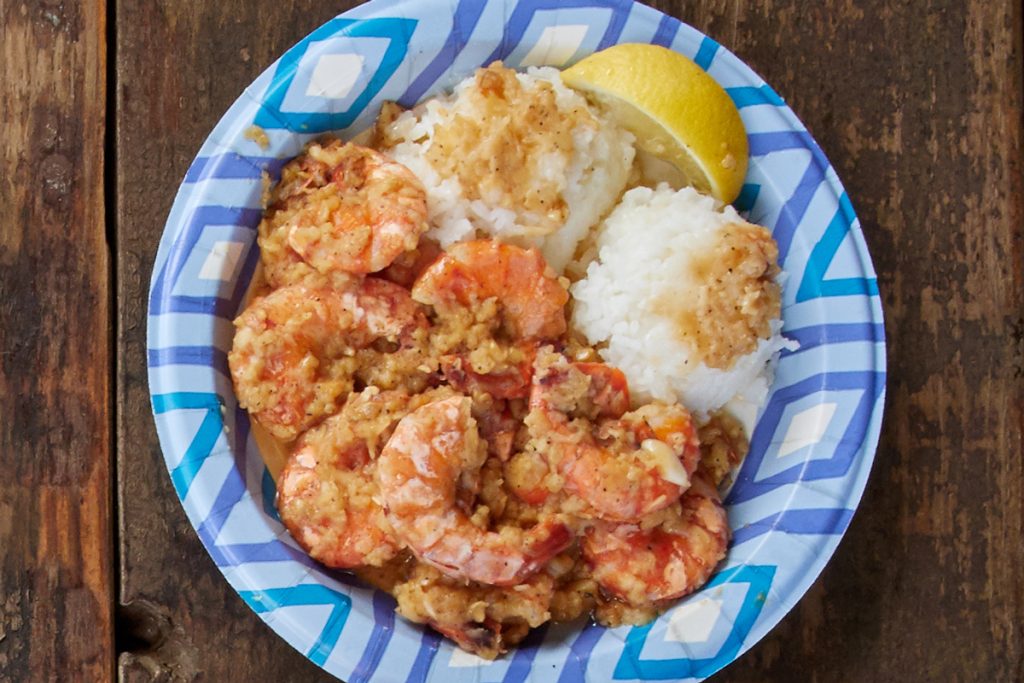
Photo: Aaron K. Yoshino
If the scenic beauty of O‘ahu’s North Shore doesn’t lure you, the aroma of sizzling garlic and melting butter will. Food trucks that sell garlicky shrimp have become staples on the North Shore, especially in Kahuku, which has been known for its freshwater aquaculture farms. But garlic shrimp has caught on across the Islands, with other food trucks and restaurants creating their own versions.
TRY THESE: Giovanni’s Shrimp Truck is thought to be the truck that started the craze. What began as a single truck in Kahuku—easily recognizable by its graffiti-ed exterior—has expanded into four locations on O‘ahu. Its signature dish? The shrimp scampi plate with a dozen shrimp marinated in olive oil, fresh chopped garlic and lemon butter, served with two giant scoops of white rice drizzled with garlic-lemon butter and caramelized chunks of garlic. There’s a spicy version, too. Not to be outdone, Maui has a number of eateries serving garlic shrimp, too. Tin Roof Maui in Kahului has a version with eight white shrimp cooked in a lemon-garlic-butter sauce, served with cabbage banchan over your choice of white rice, brown rice or noodles.
Mochi Doughnuts
Swapping all-purpose flour with mochiko (sweet rice flour) transforms an ordinary yeast doughnut into a chewier—perhaps better—version. Bakeries across the Islands are serving various mochi-based doughnuts in flavors like liliko‘i, pandan, black sesame and matcha. These doughnuts are shaped into rings made up of eight segments that are easily pulled apart—similar to the pon de ring doughnuts popular in Japan.
TRY THESE: Liliha Bakery on O‘ahu has perfected the poi mochi doughnut, bright purple, chewy and light with a sugary glaze. On Hawai‘i Island, Mountain View Bakery, known for its stone cookies, recently introduced mochi doughnuts in flavors like glazed taro, churro and orange dream.
Dry Mein
Dry mein is a noodle dish unique to Maui. It’s very similar to Chinese lo mein, where the noodles are boiled, drained, then tossed with a savory sauce and served with chopped char siu pork, bean sprouts and green onions. So the saimin-style noodles are actually dry; they’re not sitting in a dashi. Instead, a bowl of hot broth is served alongside the dry mein for dipping the noodles. Sam Sato’s has been serving dry mein since the 1960s, and the recipe is a closely guarded secret.
Banana Bread
You can find banana bread practically everywhere—especially in home kitchens during the pandemic—but Hawai‘i arguably has the best. The Road to Hāna on Maui has become known for its roadside stands serving freshly baked banana bread, and most hotel restaurants offer slices for breakfast.
TRY THESE: The banana bread at Aunty Sandy’s Banana Bread in Ke‘anae is so good—and popular—it’s become part of the stand’s name. Just off the Road to Hāna, this stand gets visitors and locals willing to make the detour because, yes, the bread is that good. The loaves are made with local bananas and the cakelike texture is rich and buttery. Kamehameha Bakery on O‘ahu may be best known for its poi glaze doughnuts, but its banana bread isn’t far behind—and for good reason. These loaves are soft, moist and sweet—and packed with banana flavor.
Malasadas

Photo: Hawaiʻi Tourism Authority (HTA)/Ben Ono
Eating a malasada is practically required on every trip to Hawai‘i. These deep-fried, sugar-dusted doughnuts were brought to Hawai‘i by Portuguese plantation laborers in 1878. Started by Portuguese immigrants, Leonard’s Bakery on O‘ahu was the first to sell malasadas to the masses, in 1953—and it continues to be the shop’s bestseller.
TRY THESE: While eating a Leonard’s malasada is basically a rite of passage, Agnes’ Portuguese Bake Shop in Kailua makes one more similar to the fried dough balls locals grew up eating: crispy on the outside, soft on the inside, and caked in sugar. On Hawai‘i Island Tex Drive In in Honoka‘a started frying up square-shaped malasadas more than 50 years ago. They’re made to order and can be filled with a variety of flavors, including guava, Bavarian cream, banana, pineapple and mango.
Boiled Peanuts
There aren’t many places in the U.S. where folks eat boiled peanuts. But Hawai‘i is one of them. These are peanuts, still in their shells, that are simmered in a pot of boiling, salty water spiked with star anise. Locals snack on these at tailgate parties, backyard lū‘au and office potlucks. They’re easy to make, but you can also find them at most local supermarkets and poke shops.
TRY THESE: Alicia’s Market on O‘ahu makes some of the best boiled peanuts around—tender, sweet, juicy and aromatic. On Maui, you can pick up boiled peanuts at Olowalu General Store, which has been around since 1932.
Chocolate-Haupia Pie
There’s something sweet—no pun intended—about the combination of chocolate and haupia. You can find chocolate-haupia pies—or variations of them—in bakeries across the Islands. The pie is most often a layer of chocolate pudding topped with a layer of haupia and whipped cream.
TRY THESE: Ted’s Bakery in Hale‘iwa is best known for its chocolate-haupia pie. Here, the flaky homemade crust is filled with a dark chocolate custard and silky haupia and topped with a mountain of whipped cream. On Maui Leoda’s Kitchen and Pie Shop bakes mini versions topped with shaved dark chocolate. It’s a fan favorite.
Flying Saucers
On Kaua‘i you can find a sandwich called a Flying Saucer. It consists of a saucy meat mixture, kind of like a sloppy Joe filling, with a slice of American cheese between two slices of buttered white bread. It’s cooked in a sandwich iron until nicely browned and, well, shaped like a flying saucer.
TRY THESE: Kaua‘i Bakery in Līhu‘e makes a Flying Saucer in manapua form. And Stan’s Kaua‘i Style Flying Saucers, which can be found at outdoor markets and events on Kaua‘i, serves a variety of disc-shaped sandwiches, including ones stuffed with turkey and gravy (for Thanksgiving) and strawberries and cream.
Mochi

Photo: Aaron K. Yoshino
Mochi is a Japanese dessert made of sweet glutinous rice flour. While it’s considered a celebratory food in Japan, traditionally eaten at New Year’s and on special occasions, in Hawai‘i, it’s eaten year-round and often filled with something sweet, like azuki beans, peanut butter and fruits.
TRY THESE: Two Ladies Kitchen in Hilo boasts 30 different varieties of mochi, stuffed with everything from marshmallows to grapes to brownies. (Recently, the shop sold li hing mui apple mochi, with fresh green apples inside soft mochi and dusted with tangy li hing powder.) Its bestseller, though, is the strawberry mochi, which you need to order ahead of time. The treat consists of a whole strawberry coated in hand-mashed sweet azuki beans, enveloped in soft mochi. On O‘ahu, Fujiya Hawai‘i has upped the mochi game, earning a James Beard Award nomination for its delicate and soft mochi in traditional and unique flavors like lychee, haupia and White Rabbit candy.
Kūlolo
You can find kūlolo on just about every Hawaiian Island, but Kaua‘i is known for producing some of the best. The simple Hawaiian staple is made from mashed kalo (taro), coconut milk and sugar. The dense dessert almost tastes like coconut fudge. You can pick up a brick of kūlolo at grocery stores and gas stations.
TRY THESE: Kapa‘a Poi Factory is the oldest commercial kūlolo factory in the state and its dessert is beloved for its sweet taste and texture. You can find the company’s kūlolo at various supermarkets on Kaua‘i and O‘ahu. Hanalei Taro runs a food truck in Hanalei and at the Puhi Park Farmers Market on Saturdays, selling its popular kūlolo made from taro grown at its farm. (The taro hummus is worth trying, too.)
Crispy Beef Jerky
Beef jerky is even better when it’s sliced super thin and so crispy it crackles. While the origin of this style of beef jerky isn’t definitive, what is for sure is how addictive the chiplike jerky is
TRY THESE: Snack Addicted makes crispy, snappy jerky in creative flavors, like oxtail soup and beef brisket pho. It even sells a 100% beef version for pets. Kona Chips on Hawai‘i Island sells three kinds of crispy beef jerky: teriyaki, chile pepper and peppered.
Huli Chicken
Huli chicken is similar to rotisserie chicken—just way more flavorful. Marinated in a teriyaki-style sauce, the chicken is cooked between two grills that are flipped over an open fire. (Huli means “turn” in Hawaiian.) It’s truly an only-in-Hawai‘i food: Ernest Morgado of Pacific Poultry first created huli huli chicken in 1955. You can still find it around the Islands, but it often won’t be called “huli huli chicken.” Morgado trademarked the name “huli huli” in 1965.
TRY THESE: Mike’s Huli Chicken on O‘ahu uses kiawe (mesquite) wood and Hawaiian sea salt to flavor the chicken, which comes with either Mike’s signature dipping sauce or one that’s hot and spicy. The rotisserie-style chicken at Koala Moa Restaurant and Catering, also on O‘ahu, has long been a local favorite. Now, it has a storefront in Kalihi.
Liliko‘i Chiffon Pie
Fluffy chiffon filling flavored with liliko‘i cradled in a buttery, flaky crust—you can’t do much better than that.
TRY THESE: Hamura’s Saimin Stand may be best known for its saimin, but you won’t want to miss its liliko‘i chiffon pie. Its cloudlike texture is super light and its fruity liliko‘i flavor is just tart enough. Wong’s Chinese Restaurant in Hanapēpē sells a variety of pies, including the popular liliko‘i chiffon. And on O‘ahu Sweet Revenge Honolulu often sells mini liliko‘i chiffon pies out of its pink food truck. You can also order ahead and pick up at its Kalihi bakery.
Guri Guri

Photo: Aaron K. Yoshino
There’s only one place in Hawai‘i—or the world—that sells guri guri, and that’s Tasaka Guri Guri on Maui. This family-owned shop in the Maui Mall has been serving the unique frozen dessert for more than a century. Guri guri is a hybrid of ice cream and sherbet and usually comes in two flavors: strawberry and pineapple. Both are delicious—and even better combined.
Crack Seed
Originally from China, crack seed are snacks typically made from preserved fruits like cherries or peaches. Some are extremely sweet—cake olive, for example—and others are very sour. Many of these dried fruits are dusted in li hing powder made from dried, salty Chinese plums.
TRY THESE: The Kaimukī Crack Seed Store on O‘ahu is a local favorite. This hole-in-the-wall boasts a huge variety of crack seed, from old-fashioned rock salt plum to dried lemon slices. Like most crack seed shops, it also sells candies, gummies and other snacks. Camellia Seed Shop in Kahului on Maui has a wide selection of crack seed and candies. Customers love its boba drinks, too.
This story was originally published in our FALL/WINTER 2025 issue, which you can buy here. Better yet, subscribe and get HAWAIʻI Magazine delivered to right to your mailbox.
Catherine Toth Fox is the former editor of HAWAIʻI Magazine and continues to contribute to the website and print publication.
Want to read more?
Check out the full article on the original site